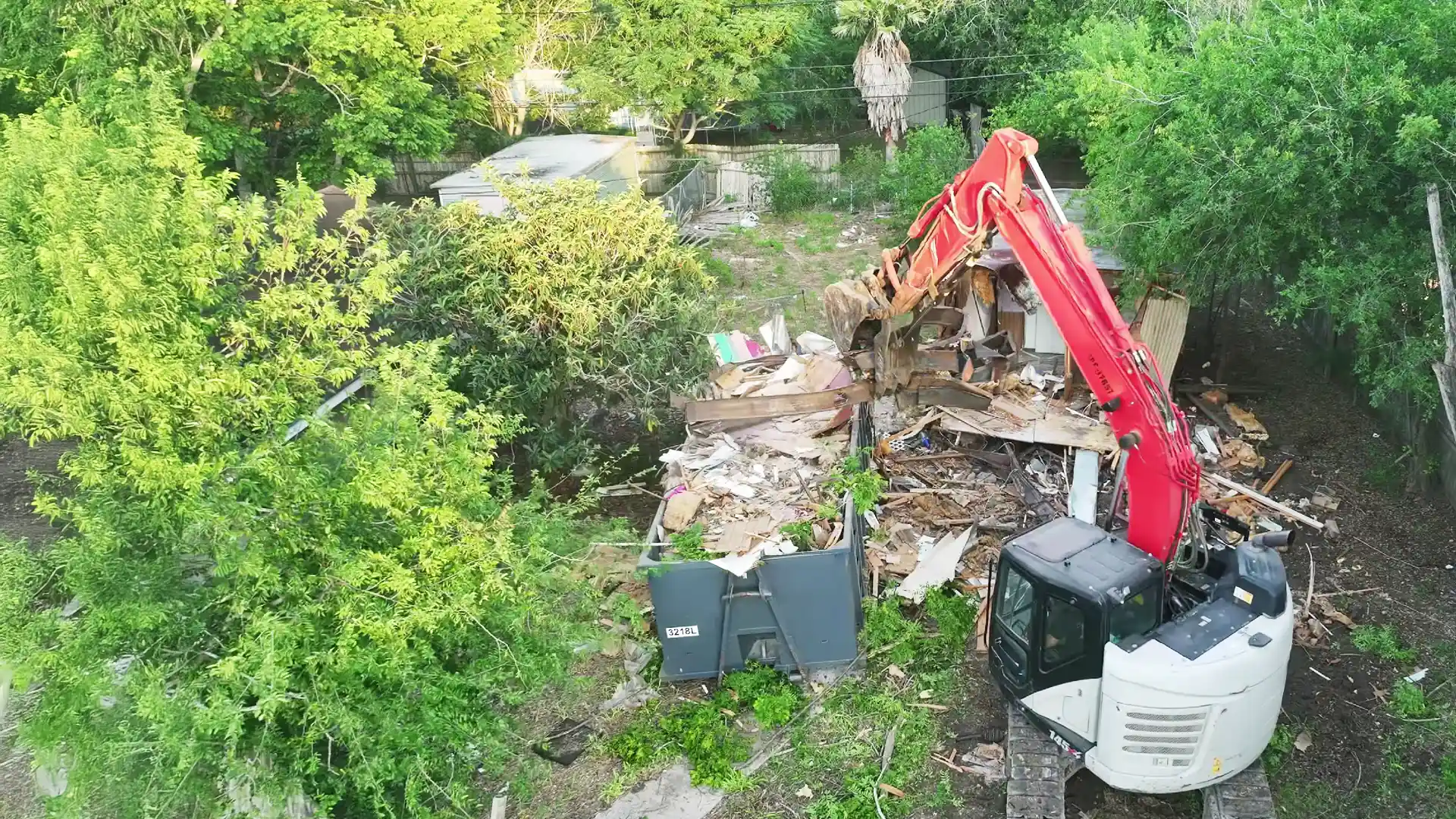
The old shed goes. So does the slab.
Demolition and Debris Hauling in {{CITY}}, TX
Sheds, old mobile homes, slabs, fences and the junk piled around them, broken down and hauled off. What’s left is a clean lot.
What comes with every job
- 20 years clearing Valley land
- Free estimates
- Se habla español
- Family owned
- {{INSURANCE_LINE}}
What we tear down and haul
Sheds and carports
Frame sheds, metal carports and lean-tos taken down to the ground, floors and footings included.
Old mobile homes
Empty mobile homes broken down and hauled, with the skirting, steps and tie-downs gone too.
Slabs and foundations
Old slabs, sidewalks and pier footings broken out and hauled, then the ground filled and leveled.
Junk and debris hauling
Years of tires, lumber, fencing and brush cuttings loaded up and taken off the lot.
Small demolition and hauling on Valley lots
Demolition and debris hauling in {{CITY}} usually starts when land changes hands. Someone buys a lot or inherits one, and there’s an old frame shed out back, a mobile home nobody has lived in for years, or a slab where a house used to stand. Before anything new goes up, it all has to come down and leave the property.
We handle small structures and the mess around them: sheds, carports, old mobile homes, slabs, sidewalks, fences, and the piles of junk and brush a lot collects over time. It pairs naturally with land clearing, and it’s often the first step before dirt work. Got something bigger, like a full house? Call and ask.
Hauling is half the job. A teardown makes a surprising amount of material, and each kind goes to a different place. Scrap metal can be recycled. Concrete, wood and household junk go to a site that’s allowed to take them. Sorting as we load keeps it all headed to the right spot.
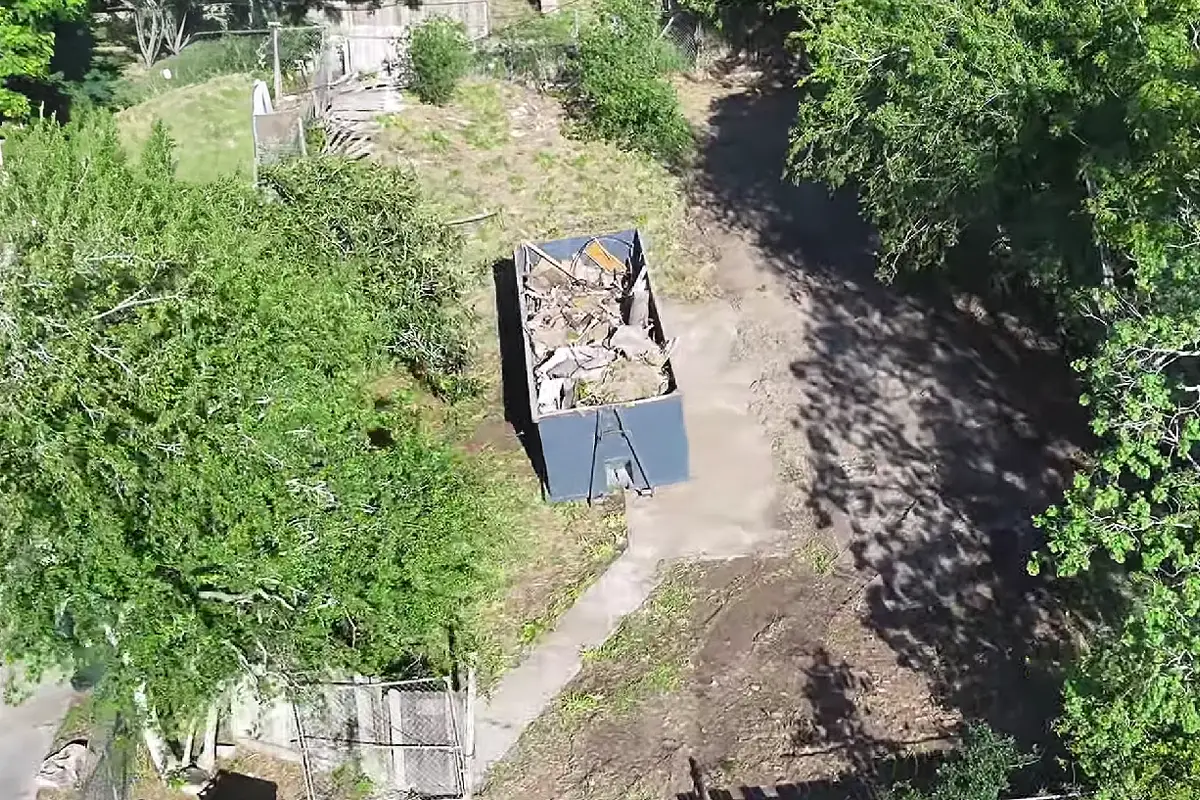
Old mobile homes
Old mobile homes stand on plenty of Valley lots, and they’re often what’s between an owner and a new build. Before one comes apart, the power, water and gas have to be shut off and disconnected by the right people. Then it’s broken down, loaded and hauled, along with the skirting, steps, tie-downs and whatever was left inside. If the home is solid enough to move instead, that’s worth looking into first.
Slabs, sidewalks and old foundations
When a house is long gone, the slab often stays behind. Breaking it out is machine work, and the concrete and rebar get loaded and hauled. Piers and footings come out too, so nothing is left to get in the way of the next foundation. Once the concrete is gone, the ground underneath is filled and leveled.
Junk piles and debris
Some lots don’t have a building to tear down, just years of stuff: old tires, appliances, fencing, lumber and brush cuttings. We load it, haul it and leave the lot raked clean. Tires and appliances can need special handling, so tell us what’s out there when you call.
Before anything comes down
- Power, gas and water off and disconnected
- Anything you want saved moved out
- City asked whether a permit is needed
- Septic tank and well located
- 811 called so buried lines get flagged
- A clear path in for the dump trailer
What usually gets hauled
- Wood framing, siding and roofing
- Metal roofing and scrap
- Concrete, block and rebar
- Old fencing and posts
- Tires, junk and household leftovers
- Brush and cuttings from the lot
How a teardown goes
From the first call to a raked, empty lot.
Show us what’s standing
Call or send the form with photos of the structure, the slab and anything piled around it.
Get a free estimate
We look at what has to come down, what it’s made of and how a dump trailer gets in and out, then send a free estimate.
Utilities off
Power, water and gas must be off and disconnected before anything is torn down. The utility companies handle their side, and we confirm it’s done before we start.
Tear down and load
The structure is broken down by machine, sorted as it’s loaded and hauled where each kind of material belongs.
A clean lot
Slab and footings out, holes filled, the ground leveled and raked. Ready for clearing, a pad or a sale.
My dad’s old mobile home had been sitting empty for years. They took it down, hauled it off with the skirting and steps, and leveled the spot. They talked everything through with my mom in Spanish.
FAQs about demolition and debris hauling in {{CITY}}
Before it comes down
Permits, utilities, septic tanks and what we can haul. Call if your question isn’t here.
Have a question that isn’t here? Call, or ask it on the form.
The size and what it’s built from matter most. A wood shed on skids is a smaller job than a mobile home with a slab, steps and a carport attached. Disposal is a big part of it, since metal, concrete and mixed junk go to different places. Access for a dump trailer counts too. Photos get you a free estimate.
Inside city limits, often yes, even for small structures. Out in the county, the rules are usually lighter. Check with the city or county before the work date, because some permits ask for proof the utilities are disconnected.
Building materials, concrete, metal, junk and brush, yes. Chemicals, paint, fuel and anything hazardous need to be set aside before we start, because they can’t go in a regular load.
Yes. If the house is long gone and only the slab or a sidewalk is left, we break it out, haul it, and fill and level the spot.
Tell us where it is. An old tank should be pumped out first, and the county can tell you how it needs to be closed. Once that’s handled, the spot can be filled and leveled with the rest of the lot.
Yes, and it usually makes sense. Demolition, hauling and land clearing in one trip means one estimate and one set of machines on the lot.
Demolition and hauling estimates
Send a photo of what has to go
Photos of the structure and anything piled around it help us price the job. Send them with the form, or call (956) 450‑1491.
- Call Now(956) 450‑1491
- Se habla español
- HoursOpen 24 hours, 7 days