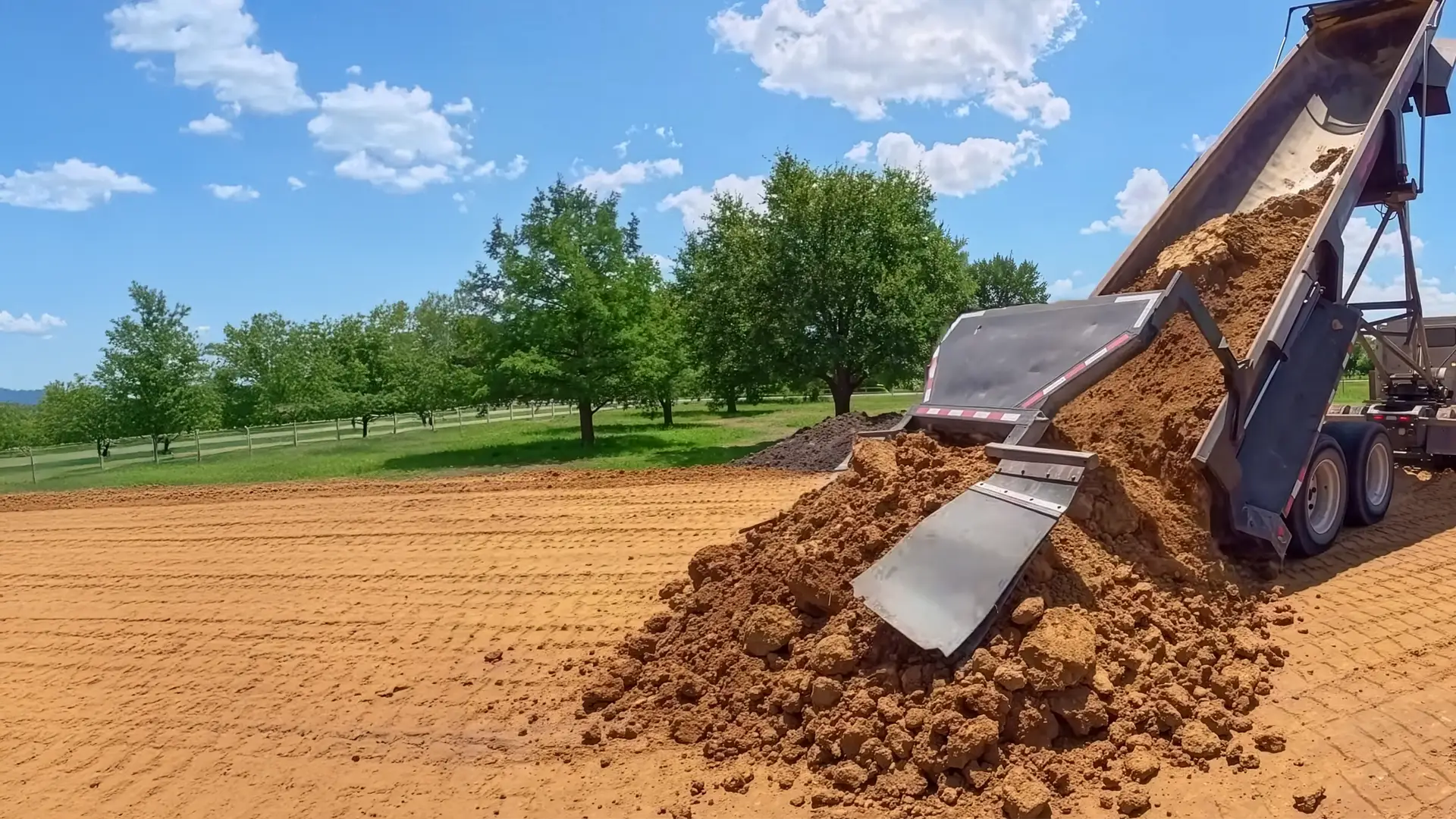
Firm, flat ground before anything goes on it
Dirt Work and Site Prep in {{CITY}}, TX
Pads, fill, grading and caliche once the brush is gone. Valley clay moves with the weather, so the dirt under your project has to be done right.
What comes with every job
- 20 years clearing Valley land
- Free estimates
- Se habla español
- Family owned
- {{INSURANCE_LINE}}
Dirt work for Valley lots and acreage
Building Pads
House, shop and barn pads raised in compacted layers and squared up for the forms and the slab.
Learn moreCaliche driveways
A packed caliche drive from the county road up to the house or shop, with a culvert where it crosses the ditch.
Grading and drainage
Lots shaped so rain runs to the street or ditch instead of sitting in the yard for days.
Fill and leveling
Low ground brought up with fill dirt or select fill, spread and packed so it doesn’t sink.
Site prep after the brush comes off
Dirt work and site prep in {{CITY}} is the step between a cleared lot and a poured slab. The ground gets shaped so water runs away from the building spot, low places get filled, and the pad is built up and packed. Skip it or rush it, and the problems show up later as cracked concrete and puddles that never drain.
Valley soil is the reason this step matters. Parts of Hidalgo County sit on heavy black clay that swells when it’s wet and shrinks and cracks when it dries. Other spots are sandy loam that drains well but won’t hold an edge. Caliche turns up under some lots and gets hauled in for others. Each one is handled a little differently.
Most dirt work follows land clearing, so it helps to have one company handle both. Our building pads page covers pads step by step. If the brush still needs to come off, start with land clearing.
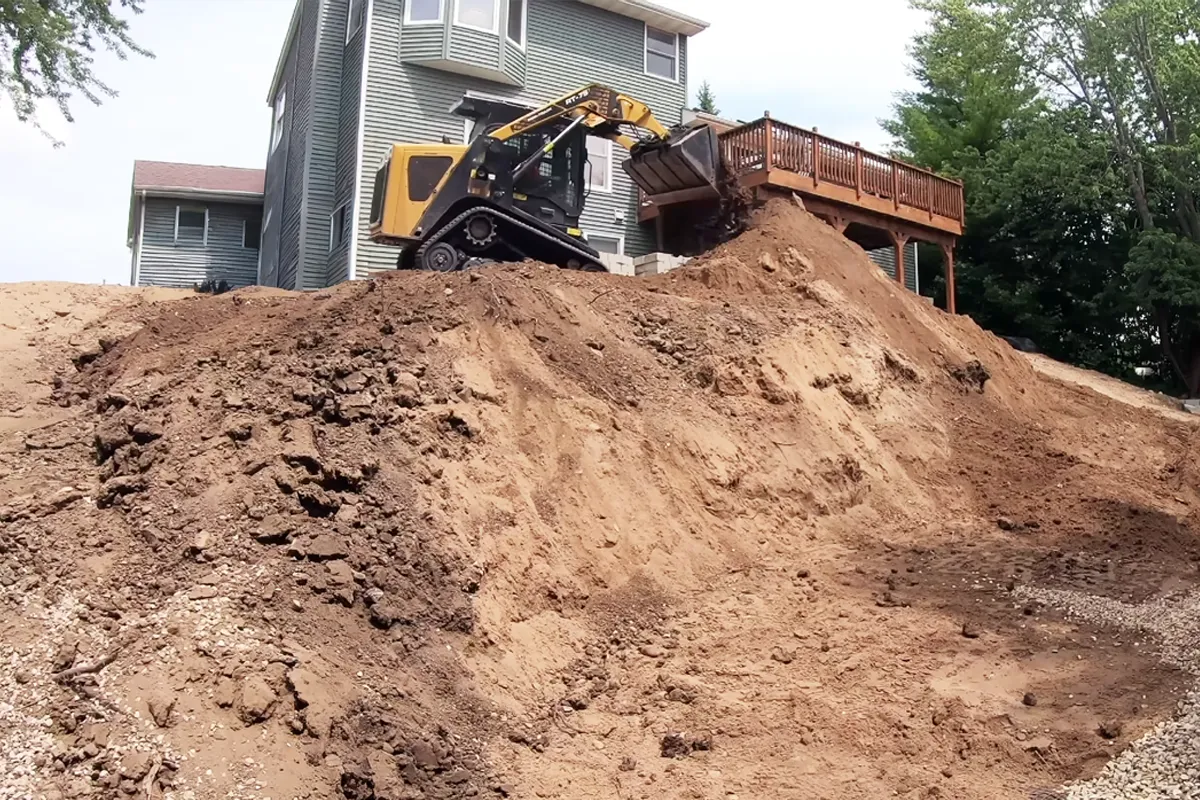
Fill dirt, select fill and caliche
Not all dirt is the same.
Fill dirt raises low ground and fills holes. It’s fine for yards and general leveling.
Select fill is cleaner and more consistent. It packs well, and it’s often what an engineer asks for under a slab.
Caliche packs hard when it’s wet down and rolled. That makes it a common choice for driveways, parking areas and the top layer of a pad.
We’ll tell you which one your job needs, and why.
Grading so the water goes somewhere
The Valley is flat, and on flat ground water doesn’t always know where to go. After a heavy storm, an ungraded lot can hold water for days. Grading puts a gentle slope on the ground so rain runs off the pad toward the street, a swale or a ditch. On rural lots along the Mile roads, that usually means working with the roadside ditch out front.
Driveways and ditch crossings
A lot that sits behind a roadside ditch needs a way in. Usually that’s a culvert pipe under the driveway with dirt and caliche built up over it. The city or county may have rules about culvert size, so it’s worth asking before work starts. After that, the driveway gets a caliche base that holds up to work trucks and the concrete truck.
Jobs that need dirt work
- A house pad on a freshly cleared lot
- A caliche drive up to a new house
- Low spots that hold water after rain
- A shop or barn pad out on acreage
- A lot that sits lower than the street
- Parking for trucks and trailers
What we’ll ask you
- Do you have a survey or site plan?
- Did an engineer set a pad height?
- Where does water stand after rain?
- Is there a ditch between lot and road?
- What goes on the pad, and how big is it?
- Is the lot inside city limits?
How dirt work gets done
The same order every time, from the first look to a packed, finished surface.
Look at the lot and the plans
We go over the survey, any engineer’s notes and how water moves across the lot today.
Clear and strip
Brush and roots come out, and the top layer of organic soil is scraped off where the pad or driveway will sit. Roots and plant matter rot and settle, so they don’t stay under concrete.
Haul in and spread fill
Fill dirt, select fill or caliche arrives by dump trailer and gets spread in thin, even layers.
Wet and pack each layer
Every layer is wet to the right moisture and compacted before the next one goes down. That’s what keeps a pad from sinking later.
Final grade
The top is shaped and sloped so water runs away from the pad, and the lot is ready for the form crew.
Water used to stand in our yard after every rain. They brought in fill and graded it so it runs out to the ditch now. The estimate was clear and they showed up when they said they would.
FAQs about dirt work and site prep in {{CITY}}
Dirt, drainage and caliche
Answers on fill, pads and wet ground. If your lot has a question we didn’t cover, call and ask.
Have a question that isn’t here? Call, or ask it on the form.
It comes down to how much material the job needs, what kind it is and how far it has to be hauled. A pad that needs a lot of select fill costs more than a lot that only needs grading. Culverts, wet ground and tight access add to it. Send your plans or a sketch and some photos of the lot for a free estimate.
Fill dirt is general soil for raising low spots and leveling a yard. Select fill is a cleaner, more uniform material that compacts more predictably, so engineers often call for it under slabs. When there’s a spec, we use what the spec says.
On black clay, usually not. Wet clay turns slick, machines tear it up, and packing fill on top of it traps the water. Sandy ground dries faster. We’ll look at the lot and tell you when it’s firm enough to work.
Yes. Caliche is hauled in for driveways, parking areas and the top layer of pads. It’s spread, wet down and rolled so it packs hard.
Not always. For a house, the builder, the lender or the city often wants an engineer’s pad spec and density tests. A shop or barn pad on acreage may not need one. If there’s a spec, we build to it.
Often, yes. Filling the low spots and grading the lot so water runs toward the street or ditch fixes a lot of standing water. If the water is coming from somewhere off your property, we’ll tell you that before you spend money on dirt.
Dirt work estimates
Tell us what’s going on the lot
Send your plans or a sketch with a few photos of the lot, or call (956) 450‑1491. Se habla español.
- Call Now(956) 450‑1491
- Se habla español
- HoursOpen 24 hours, 7 days