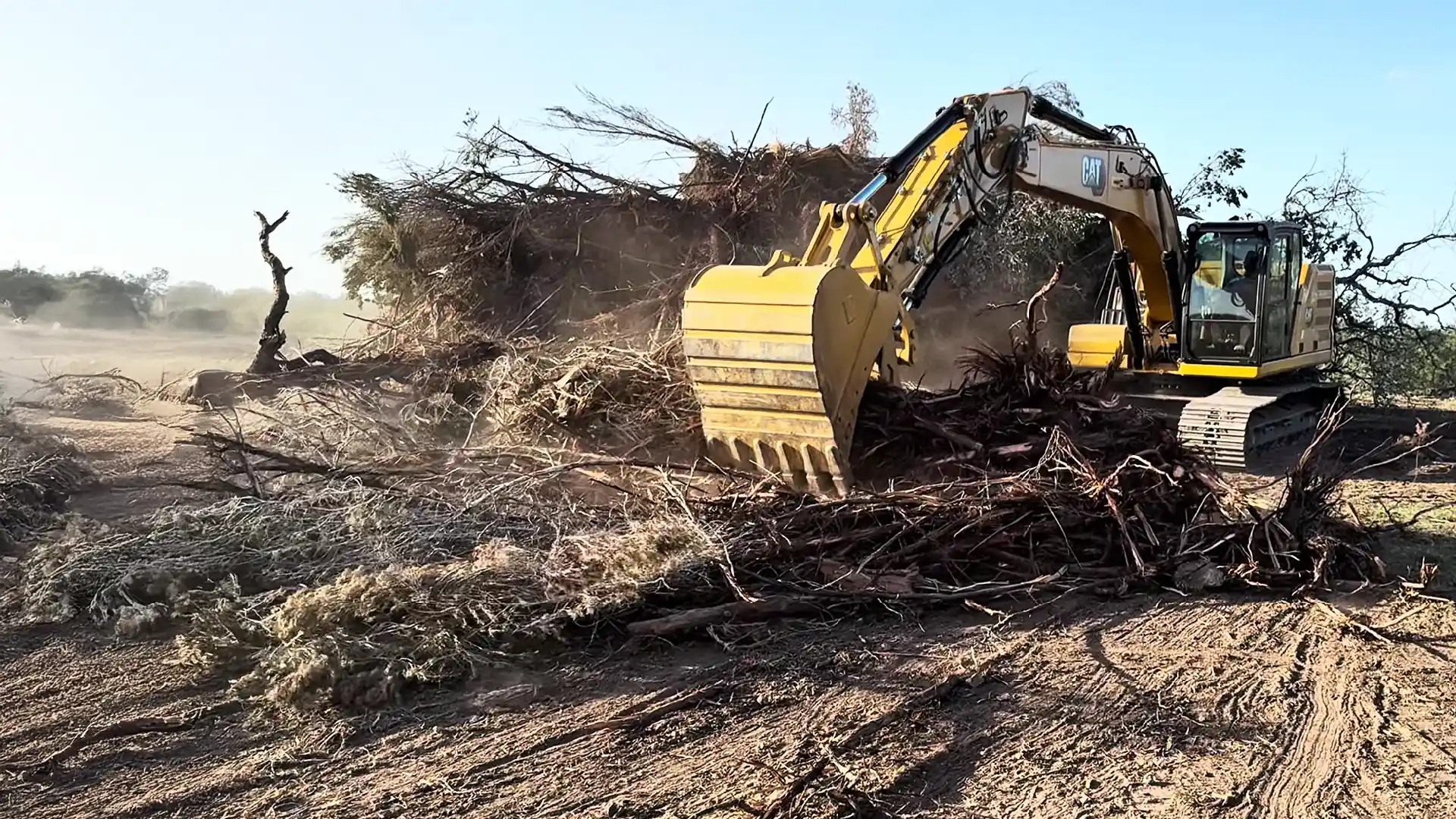
Get your land back from the brush
Land Clearing Services in the Rio Grande Valley
Mesquite, huisache and thick brush taken off lots, ranchettes and acreage from Mission to Edinburg. Grubbed, mulched or hauled, depending on what the ground is for.
What comes with every job
- 20 years clearing Valley land
- Free estimates
- Se habla español
- Family owned
- {{INSURANCE_LINE}}
Pick the job closest to yours
Mesquite Removal
Shredding leaves the root crown alive, so the tree returns as a clump of thorny stems. Grubbing takes the crown out.
Learn moreLot Clearing
Residential lots taken down to bare dirt, roots out where the house will sit, trash hauled off. Ready for the surveyor and the pad.
Learn moreForestry Mulching
Brush chewed into chips and left where it grew. Good for acreage, fence lines and trails where you want it open but not scraped bare.
Learn moreClearing that fits what comes next
Land clearing in the Rio Grande Valley starts with one question: what’s the ground for? A house pad needs every root out. A pasture needs the brush gone and the topsoil left alone. A lot you’re selling just needs to look like a lot again. Marcos has spent 20 years clearing Valley land, and the method always follows the plan for the property.
Valley brush has its own habits. Mesquite sprouts again from the base when it’s cut. Huisache and granjeno grow into thorny thickets along fences and ditch banks. Retama seeds in wherever water likes to sit. On the flat farm grid, a field nobody tends can turn back into brush faster than most owners expect.
Typical jobs: inherited acreage that’s gone to brush, a ranchette somebody just bought, a lot getting ready for a house, and a builder who needs bare dirt before the pad. Our mesquite removal, lot clearing and forestry mulching pages explain each method in more detail.
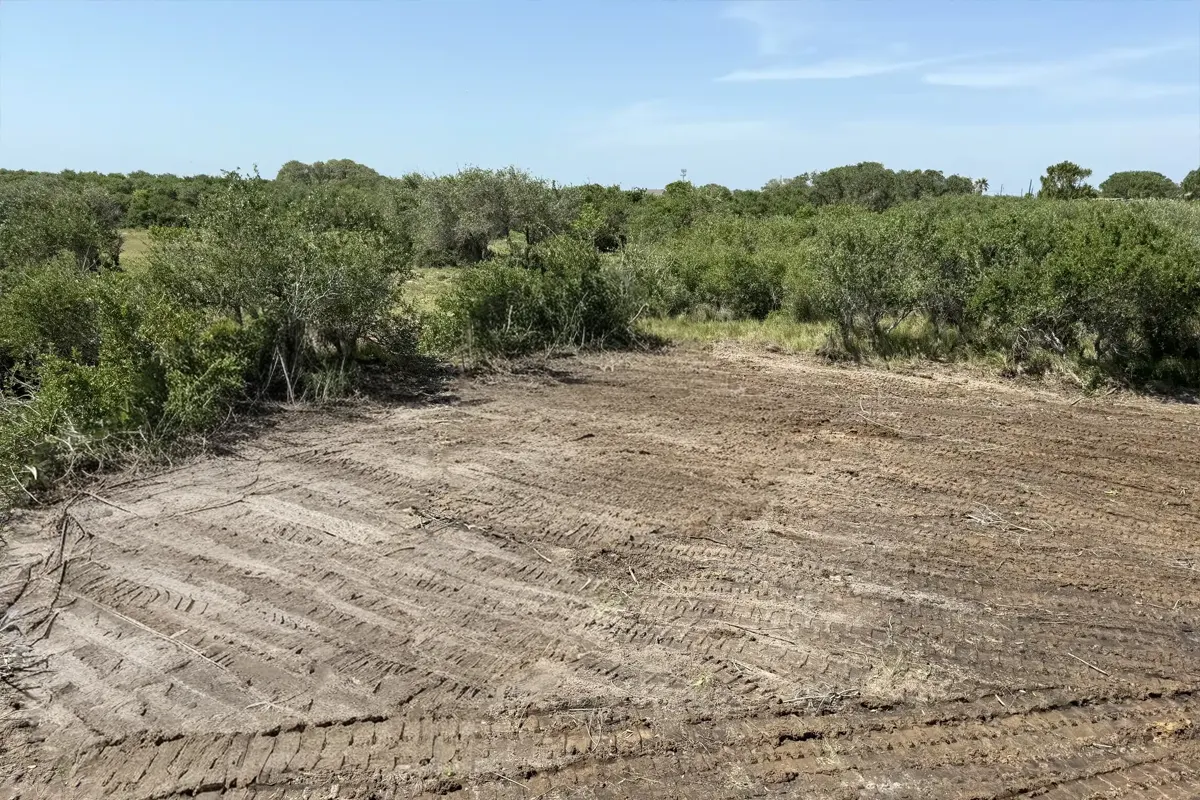
Three ways to handle Valley brush
Grubbing uses an excavator or a root rake to dig brush out, root crown and all. It’s the right call under a slab, a driveway or anywhere you never want sprouts again.
Mulching grinds brush where it stands with a mulching head on a skid steer. The chips stay on the ground as cover, which suits pasture, back acreage and fence lines.
Piling and hauling pushes brush into piles and loads it on a dump trailer so it leaves the property for good.
Most jobs use two of the three. A lot might get grubbed where the house goes and mulched along the back fence.
Why we’d rather not burn it
A lot of Valley brush used to end up in a burn pile. Counties issue burn bans during dry spells, though, and a pile that’s waiting on the weather just sits there until the ban lifts. Smoke drifting toward houses brings its own complaints. Mulching or hauling avoids all of it, because the brush is dealt with as it comes down.
What’s hiding under the brush
Thick brush covers up more than dirt. Old fence posts, irrigation pipe from the farming days, a septic tank nobody remembers, a drainage ditch that’s slowly filled in. On older Valley tracts you can find all of those on one property. The property gets walked and anything found gets marked before a machine starts pushing.
Signs it’s time to clear
- Mesquite sprouting from old cut stumps
- Huisache closing in on a fence
- You can’t walk the property line
- A lot you can’t show to buyers
- Rats and snakes living in the brush
- A builder waiting on bare ground
Before clearing day
- Tie ribbon on the trees you’re keeping
- Find the survey corner pins
- Locate the septic tank and water line
- Call 811 to flag buried utilities
- Move vehicles and anything stored outside
- Ask the city if a permit is needed
How a clearing job runs
Every property is different, but the order of the work stays the same.
Tell us about the property
Call (956) 450‑1491 or send the form. The nearest Mile road or cross street, the rough size and a few photos are plenty to get started.
Get a free estimate
Marcos looks at the brush and the ground, from your photos or on site, and lays out what comes off, how it’s handled and what stays.
Mark the property
Kept trees, property corners, the septic and any buried lines get marked. If something’s unclear, we stop and ask before a machine gets near it.
Clear the brush
The brush is handled exactly as the estimate lays out: grubbed, mulched or piled for the trailer. Anywhere a building is planned, the crowns come out.
Walk it together
Before we pull out, we walk the property with you and go down the estimate line by line.
Good to know
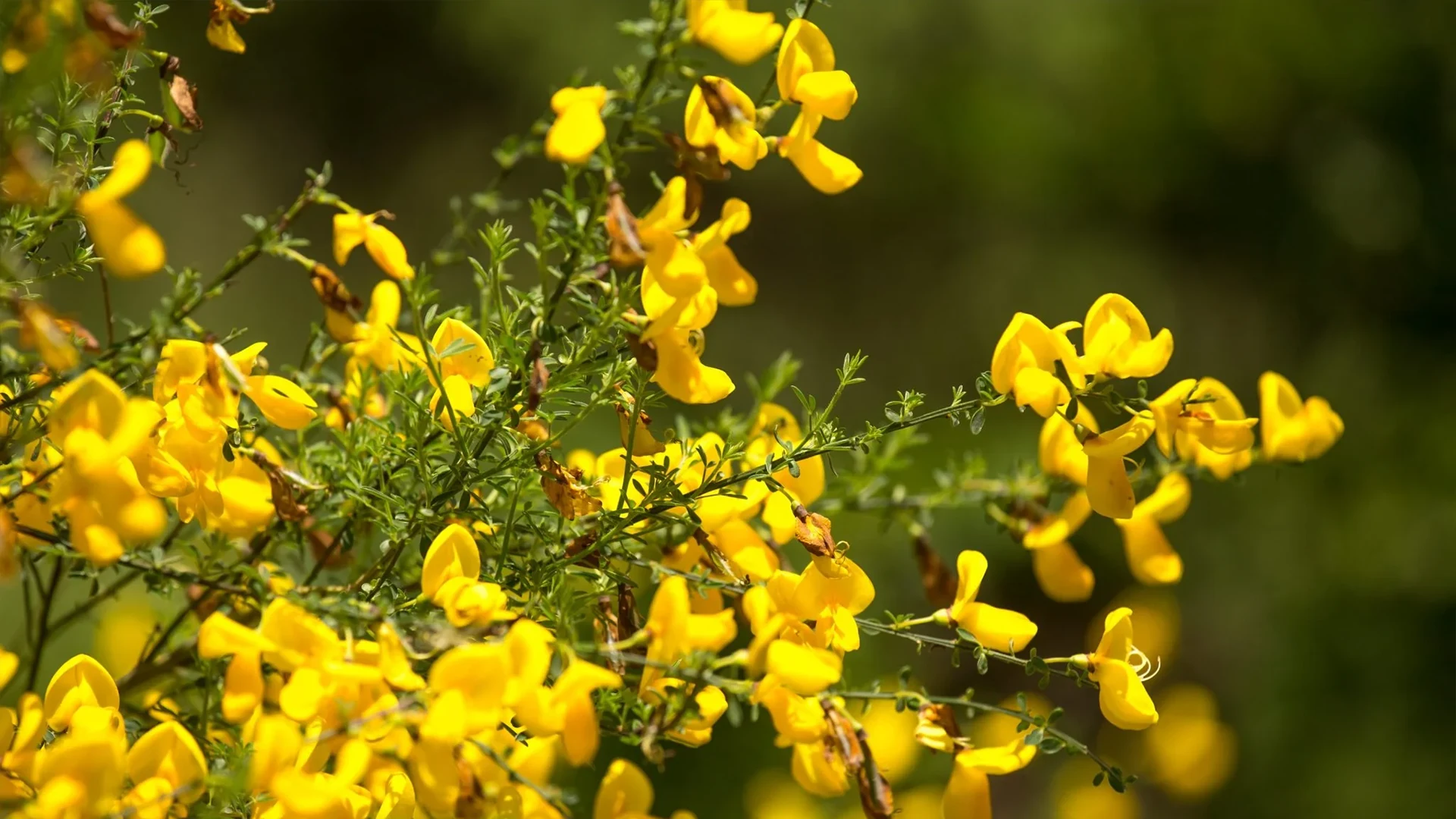
Retama has green bark and green stems that make food from sunlight, so in a dry spell it can drop its tiny leaves and stay alive. It also likes low ground, which is why it shows up fast wherever water collects on a cleared lot.
FAQs about land clearing in the Rio Grande Valley
What owners ask before we start
Short answers on cost, regrowth and what happens to the brush. Anything else, just call.
Have a question that isn’t here? Call, or ask it on the form.
It depends on the size of the property, the density of the brush, the size of the mesquite and what happens to it afterward. Grubbing costs more than mulching because every crown gets dug out. Hauling adds trailer loads. Wet ground, tight gates and junk mixed into the brush slow the work too. Send a few photos and the rough size, and we’ll put together a free estimate.
Anything that’s grubbed out by the root crown won’t sprout from that crown again. Mulched or shredded brush keeps its roots, so mesquite and huisache can come back from the stumps. Seeds already in the soil can also sprout no matter how it was cleared. Walk the ground each spring and pull seedlings while they’re small.
Yes. Tie ribbon around the ones that stay before the machines arrive, and we’ll go over them again on the first walk. Leaving a little room around each kept tree protects the roots, so say so if a tree matters to you.
There are three choices. It can be mulched and left on the ground, piled and hauled off on a dump trailer, or a mix of both. The estimate spells out which one we’re planning and where.
Light brush on a single lot goes quickly. Thick mesquite on acreage takes longer, and rain on black clay can stop work until the ground firms up. Your estimate will give you a realistic idea of the time on site.
Out in the county, clearing brush usually doesn’t need one. Inside city limits, some cities want a permit for land disturbance, fill or work near drainage. A quick call to the city’s building office settles it, and if you got a notice about an overgrown lot, send it with your photos.
Land clearing estimates
Show us the brush
Send the form with a few photos of the thickest part, or call (956) 450‑1491. Se habla español.
- Call Now(956) 450‑1491
- Se habla español
- HoursOpen 24 hours, 7 days