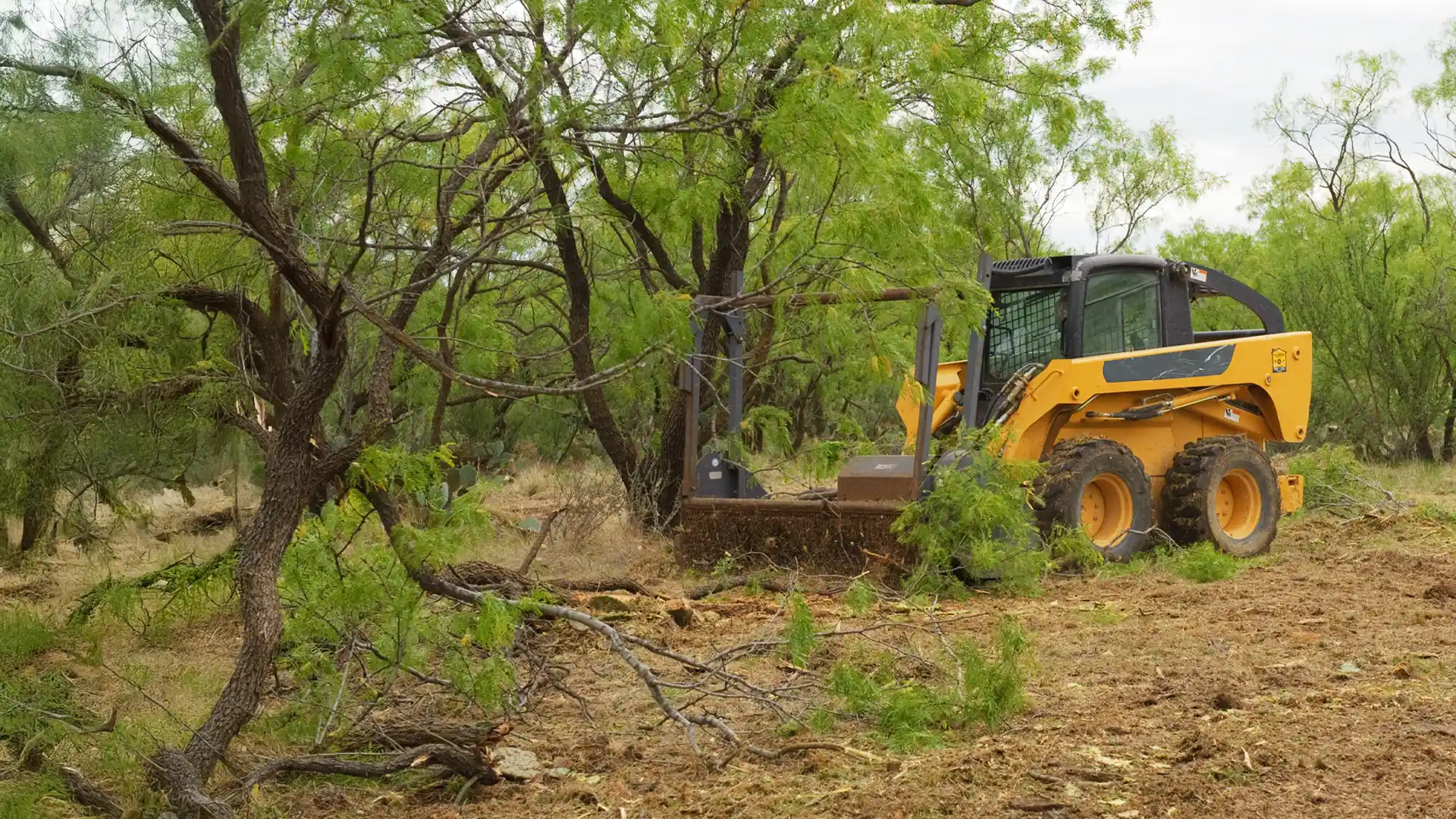
The brush stays on the ground, as mulch
Forestry Mulching in {{CITY}}, TX
A mulching head grinds brush and small trees where they stand. No burn pile, no hauling, and the ground stays covered.
What comes with every job
- 20 years clearing Valley land
- Free estimates
- Se habla español
- Family owned
- {{INSURANCE_LINE}}
How forestry mulching works
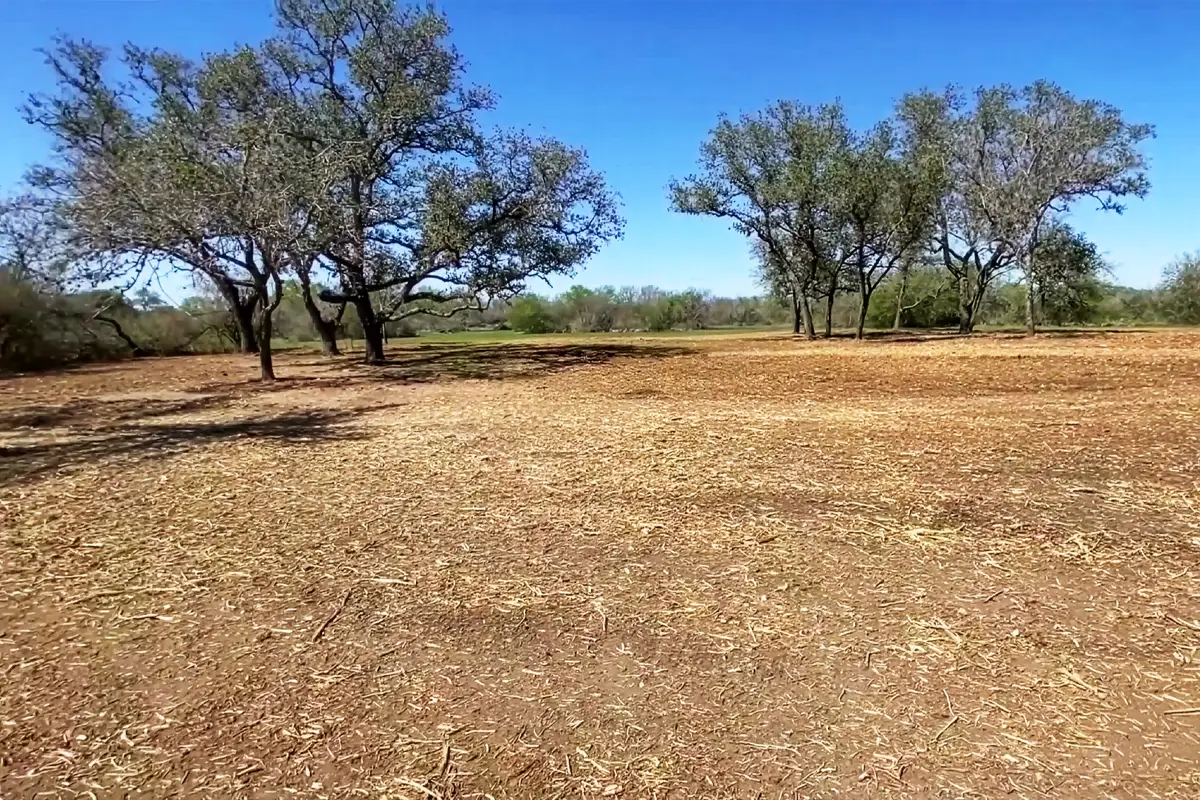
Forestry mulching in {{CITY}} is done with a mulching head, a heavy spinning cutter lined with teeth, on the front of a skid steer. It chews through brush and small trees and drops the chips back on the ground. A thicket of huisache and young mesquite comes out the other side as a layer of mulch you can walk on.
It’s a good fit for ranchettes, back acreage, fence lines and trails, anywhere you want the brush gone but don’t need bare dirt. Mulching is one of our land clearing methods. Where the ground has to be root-free for a slab, mesquite removal by grubbing is the better tool.
Why the mulch layer helps
Bare Valley dirt doesn’t stay put. Spring wind lifts dry sandy soil, and a hard rain runs right off bare clay. A layer of mulch slows both down. It holds moisture in the ground, shades out some weed seed, and breaks down over time. On a pasture or a back lot, that’s a better start than scraped dirt.
No burn pile to wait on
Mulching ends the job with the brush already taken care of. There’s no pile sitting at the back of the property and no smoke drifting into the neighbor’s yard. Since nothing gets burned, a county burn ban doesn’t hold the work up.
What mulching won’t do
Mulching cuts brush at or just below the ground. It doesn’t pull roots, so mesquite and huisache can resprout from the stumps. That makes it the wrong method under a future slab or driveway. Big trunks and old stumps are slow going for a mulcher too. On many jobs, the answer is to mulch most of the property and grub the spots where something will be built.
Good places to mulch
- Overgrown ranchette acreage
- Brushy fence lines
- Trails and paths through the brush
- Back lots you want open, not bare
- Senderos and lanes on brush land
- Open space around a house in the brush
When mulching isn’t the answer
- Ground under a future slab
- Driveway and pad sites
- Old stumps you want gone completely
- Piles of junk or trash
- Brush you want hauled off the land
- Ground that needs regrading
A mulching job, start to finish
Mulching jobs are simple, and they run like this.
Show us the brush
Photos and the rough size of the area are enough for a first look. Tell us if anything should stay.
Get a free estimate
Marcos sizes the job from the density of the brush, the trunk sizes and the acreage.
Mark the keepers
Trees to keep, fence lines and anything buried get marked before the mulcher starts.
Mulch it down
The mulching head works through the brush, leaving chips on the ground as it goes.
Walk it
We walk the finished area with you. Spots that need grubbing for a future build can be done on the same trip.
Our place outside Mission had huisache so thick along the fence you couldn’t see the wire. They mulched it down and it looks neat now. No burn pile to deal with, which mattered in a dry year.
Good to know
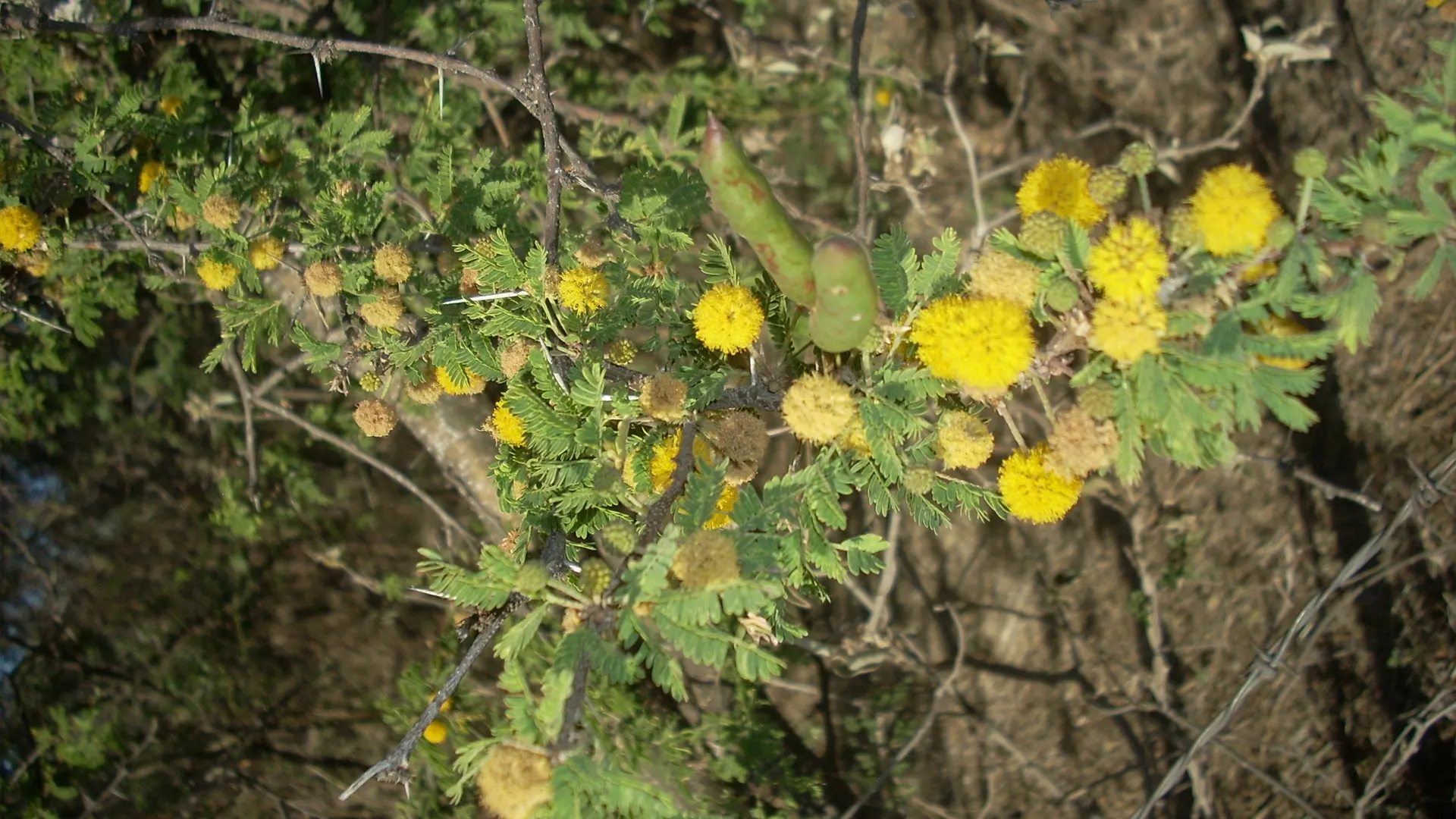
Huisache blooms in late winter with small yellow flowers that smell sweet. The pairs of sharp thorns along every branch are why it gets cleared by machine and not by hand.
FAQs about forestry mulching in {{CITY}}
Mulching questions before you book
What mulching does, what it doesn’t, and what it leaves behind.
Have a question that isn’t here? Call, or ask it on the form.
Mulching is one way to clear land. It grinds the brush in place and leaves the chips. Other clearing methods dig out the roots or pile the brush and haul it away. The right one depends on what the ground is for.
Some of it can. Mulching leaves the roots in the ground, so mesquite and huisache may sprout from the stumps. Mowing the sprouts while they’re small keeps them in check. For ground that must stay clear, grubbing is the better choice.
It depends on how dense the brush was. Thick huisache leaves a heavier layer than scattered brush. Either way it settles and breaks down over time.
Yes. Mulching doesn’t burn anything, so a burn ban doesn’t stop it. In very dry, windy weather, any machine work in brush calls for extra care, and we plan around that.
Small and medium trees, yes. Big trunks are slow work for a mulcher, so large mesquite is usually cut down and either grubbed out or hauled instead.
Yes. Mark them before the job, and the mulching head steers around them.
Free forestry mulching estimates
Open up the brush without a burn pile
Send the form with photos of the brush, or call (956) 450‑1491. Se habla español.
- Call Now(956) 450‑1491
- Se habla español
- HoursOpen 24 hours, 7 days